General
Search engine marketing is one of the most misunderstood terms in digital business. Ask ten SME owners what SEM means, and at least seven will say “paid ads.” It is a reasonable assumption, but it is only half the picture. SEM actually sits at the intersection of paid advertising and organic search strategy, and when you treat it that way, the results can be genuinely transformative. For UK SMEs competing in increasingly crowded online markets, understanding SEM in its full sense is not just useful — it is essential for sustainable growth.
Table of Contents
- Understanding search engine marketing
- Core elements of an effective SEM strategy
- Why SEM is vital for UK SME growth
- Tips for maximising your SEM impact
- The uncomfortable truth about SEM for SMEs
- Supercharge your SME’s digital growth with expert SEM help
- Frequently asked questions
Key Takeaways
| Point | Details |
|---|---|
| SEM defined clearly | Search engine marketing blends paid and organic methods to boost visibility and sales. |
| SMEs benefit the most | SEM helps UK SMEs reach new customers and increase revenue by targeting relevant search audiences. |
| Core SEM components | Keyword targeting, PPC, SEO, and analytics are essential for an effective SEM strategy. |
| Practical SEM tips | Target specific keywords, test ads, and refine campaigns to maximise SEM results. |
| Expert support matters | Professional SEM advice can accelerate growth and prevent common mistakes. |
Understanding search engine marketing
SEM, or search engine marketing, refers to the practice of increasing a business’s visibility in search engine results pages through both paid and organic methods. That broad definition matters enormously, because many SMEs plan their digital budgets around one channel only, leaving serious opportunity on the table.
At its core, SEM brings together two distinct disciplines:
- SEO (Search Engine Optimisation): The process of improving your website’s content, structure, and authority so that search engines rank it higher in unpaid (organic) results.
- PPC (Pay-Per-Click advertising): Paid campaigns, typically through Google Ads or Bing Ads, where you bid on keywords and pay each time a user clicks your ad.
- Keyword research and targeting: Identifying the precise phrases your potential customers type into Google when they are ready to buy or enquire.
- Landing page optimisation: Ensuring the pages users arrive on are designed to convert interest into action, whether that is a phone call, form submission, or purchase.
- Performance analytics: Tracking every click, impression, conversion, and cost to understand what is working and what needs refining.
One of the biggest misconceptions is that digital marketing basics like social media or email replace SEM. They do not. Search sits at the point of intent. When someone types “commercial electrician in Manchester” or “affordable accountant Birmingham,” they are actively looking for a solution. SEM puts your business directly in front of that person at exactly the right moment.
“SEM is not about being everywhere online. It is about being in the right place when the right customer is searching. That precision is what separates it from almost every other marketing channel.”
Businesses often confuse SEM with pure PPC because Google Ads is the most visible tool in the SEM arsenal. But exploring SEM options reveals a far richer picture, one where your organic rankings and your paid campaigns reinforce each other, share keyword intelligence, and ultimately drive down your cost per lead over time.
Understanding these SEM methods and how they interact is the first step toward building a strategy that actually delivers results for your business, rather than just generating activity and invoices.
Core elements of an effective SEM strategy
Now that you understand what SEM covers, the practical question is: which elements should your SME prioritise, and in what order?
Here is a straightforward framework we recommend for most UK SMEs starting or restructuring their SEM approach:
- Start with keyword research. Before spending a penny on ads or writing a single page of content, you need to understand how your customers search. Tools like Google Keyword Planner reveal not just search volumes but intent signals. A phrase like “emergency boiler repair Leeds” signals someone ready to spend money today. A phrase like “how does a combi boiler work” signals curiosity, not purchasing intent. Build your strategy around intent-driven keywords first.
- Build SEO foundations. Optimise your core service and location pages with targeted keywords, clear meta descriptions, and structured headings. Ensure your site loads quickly on mobile. These steps may take several months to show results, but they create a compounding asset that pays dividends indefinitely.
- Launch targeted PPC campaigns. Google Ads for SMEs can deliver leads within days of going live, making PPC your fastest route to visibility. Use tightly themed ad groups so that each ad matches the keyword it serves. Set geographic targeting to your actual service areas to avoid wasting budget on clicks from outside your reach.
- Integrate paid social for broader funnel coverage. Paid social strategies on platforms like Meta or LinkedIn can warm audiences before they search, making your search campaigns more effective. This is particularly valuable for B2B SMEs where the buying cycle is longer.
- Track everything from day one. Set up Google Analytics 4 and Google Search Console before any campaign goes live. Without baseline data, you cannot measure progress or justify your spend.
| SEM element | Timeline to results | Typical cost level | Best suited for |
|---|---|---|---|
| SEO content | 3 to 6 months | Low to medium | Long-term organic growth |
| Google Ads PPC | 1 to 7 days | Medium to high | Immediate lead generation |
| Bing Ads | 1 to 7 days | Low to medium | Cost-efficient supplementary reach |
| Paid social | 1 to 14 days | Medium | Brand awareness and retargeting |
| Landing page optimisation | Ongoing | Low | Improving conversion rates |
Pro Tip: Your Google Ads Quality Score directly affects how much you pay per click. A high Quality Score (earned through relevant ad copy, targeted keywords, and strong landing pages) can reduce your cost per click by 30% to 50% compared with a low-scoring competitor bidding on the same keyword. Invest in the full experience, not just the ad.
You can complement your SEM approach by reviewing social advertising tips to understand how paid social fits alongside search campaigns in a joined-up strategy.
Why SEM is vital for UK SME growth
The UK digital advertising market continues to grow at a significant pace. According to the Internet Advertising Bureau UK, digital ad spend in the UK reached £29.6 billion in 2023, and search advertising accounts for the largest share of that figure. Your competitors are investing. The question is whether you are investing smarter.
Here is why SEM specifically moves the needle for UK SMEs:
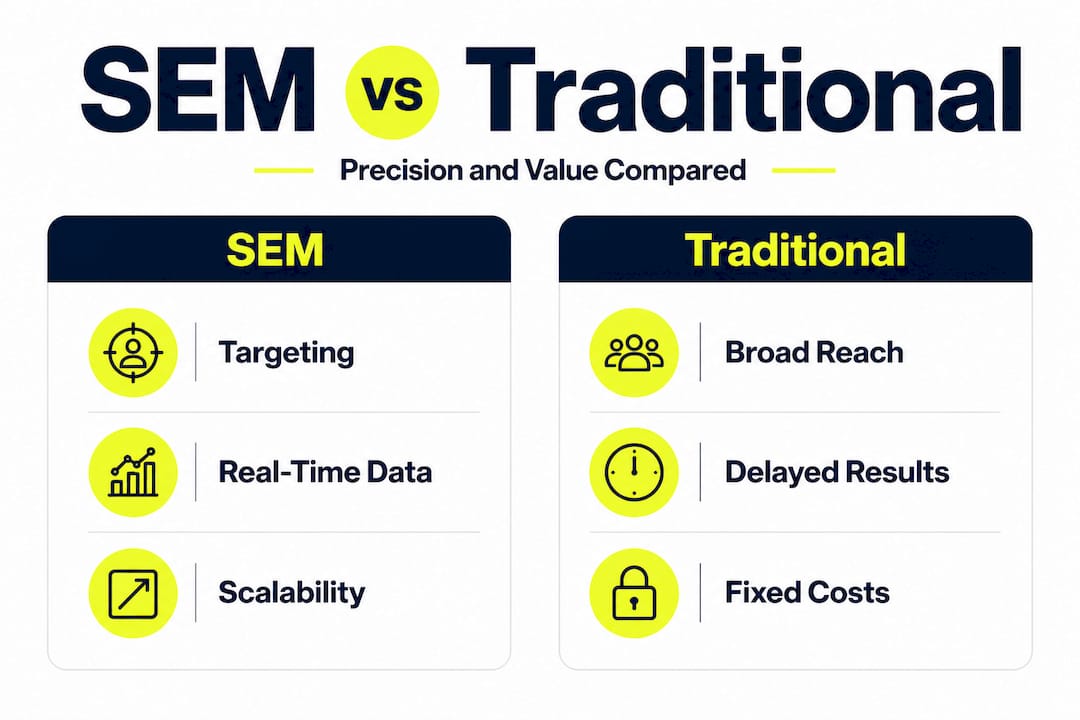
Precision targeting beats broad reach. Traditional marketing channels like print, radio, and outdoor advertising cast wide nets. SEM targets people at the exact moment they express a need relevant to your business. That difference in intent is why SEM typically delivers a far lower cost per qualified lead than traditional channels.
Local SEM is particularly powerful. Google’s local search features, including the Local Pack (the map results that appear at the top of many searches), are directly influenced by your SEO and Google Business Profile activity. For a plumber in Sheffield or a solicitor in Edinburgh, ranking in local results is often more valuable than a national ranking.
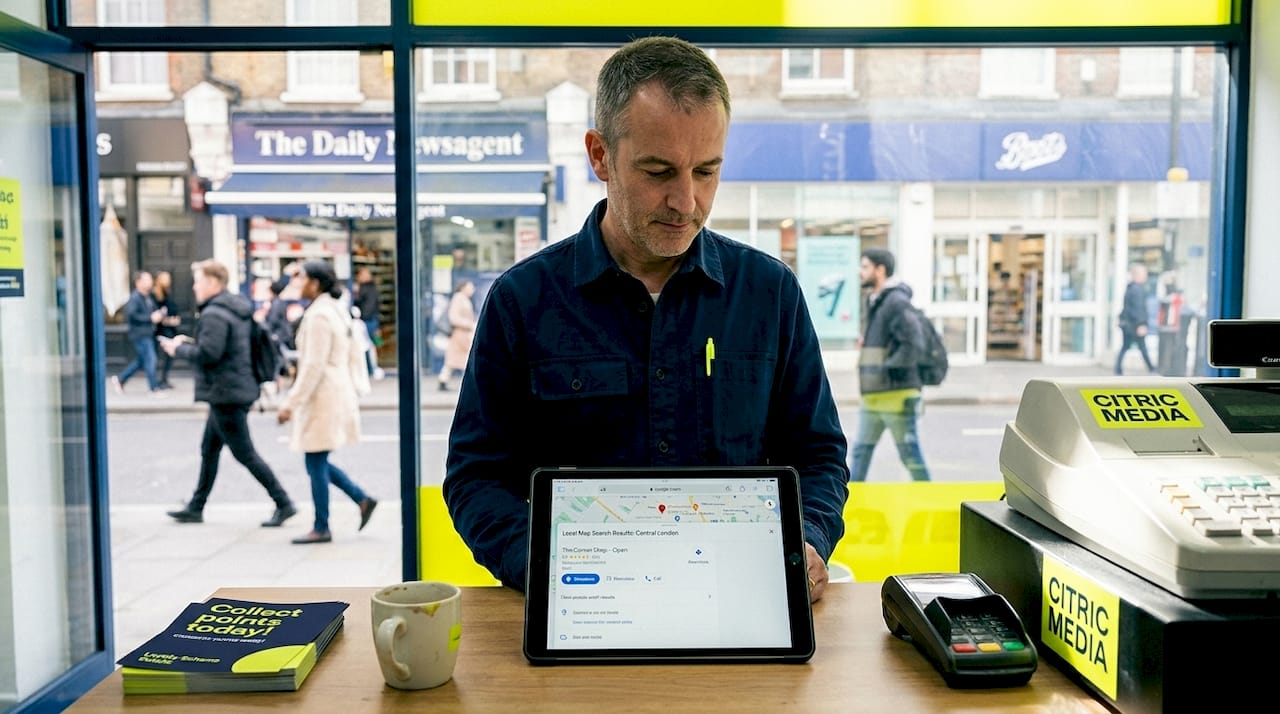
Measurability builds confidence. One persistent frustration SME owners raise with traditional marketing is not knowing what is working. SEM is fully measurable. You can see exactly which keywords generated enquiries, what those enquiries cost, and what your return on investment looks like. The SEO investment benefits compound over time as your rankings improve and your cost per lead falls.
SEM versus traditional marketing for UK SMEs:
| Factor | SEM | Traditional marketing |
|---|---|---|
| Targeting precision | High (intent-based) | Low to medium |
| Speed to results | Days (PPC) to months (SEO) | Weeks to months |
| Measurability | Full (click, conversion, cost) | Limited |
| Budget flexibility | Start from £300 per month | Often high minimum spend |
| Long-term compounding | Yes (SEO builds over time) | No |
| Geographic targeting | Postcode or city level | Broad |
Research consistently shows that businesses investing in combined SEO and PPC strategies see significantly higher click-through rates than those relying on either channel alone. When your business appears in both the organic and paid results for the same search query, users perceive your brand as more authoritative and trustworthy. That perception directly increases conversion rates.
Tips for maximising your SEM impact
Knowing the theory is one thing. Putting it into practice without burning through your budget is another matter entirely. These are the practical steps we see making the biggest difference for UK SMEs:
- Prioritise long-tail keywords. Phrases like “bespoke kitchen installation Derby” convert far better than broad terms like “kitchens.” They attract fewer searchers but higher-intent ones, meaning your budget goes further. SEM tips consistently point to long-tail targeting as the highest-leverage activity for SMEs with limited budgets.
- Write ad copy that addresses the specific problem. Generic copy like “We offer great service at competitive prices” converts poorly. Copy that says “Same-day boiler repairs across Leeds — call before 10am, fixed by 5pm” speaks directly to an urgent need. The more specific the problem you name, the more confident the prospect feels that you understand their situation.
- Use negative keywords aggressively. In Google Ads, negative keywords prevent your ads from showing for irrelevant searches. If you sell commercial catering equipment, you probably do not want clicks from people searching for home kitchen appliances. Negative keyword lists protect your budget and improve your campaign’s relevance scores simultaneously.
- Match your landing page to your ad precisely. If your ad promises “free commercial cleaning quotes in Birmingham,” the landing page the user lands on must deliver that specific offer immediately, not just your generic homepage. Mismatches between ad and landing page are one of the single biggest causes of wasted SEM spend.
- Monitor campaigns weekly, not monthly. SEM conditions change. Competitors adjust bids. Seasonal demand shifts. A campaign that performed well in October may need recalibrating in January. Weekly reviews let you catch issues before they become expensive.
- Set up conversion tracking before any paid campaign goes live. Without it, you are flying blind. Tracking form submissions, phone calls, and chat interactions gives you the data to enhance SEM outcomes through informed optimisation rather than guesswork.
Pro Tip: Run A/B tests on your landing pages regularly. Even small changes, such as moving the enquiry form above the fold, changing the headline, or adding a trust signal like a verified review count, can shift conversion rates by 20% to 40%. Over the life of a campaign, those gains compound significantly.
The uncomfortable truth about SEM for SMEs
Here is something most SEM guides will not tell you: SEM will not rescue a fundamentally weak business proposition. We have seen SMEs invest significant budgets into well-structured campaigns only to see poor results, and the reason is almost never the campaigns themselves.
The real issue is expectation misalignment. Many SME owners approach SEM looking for a quick win. They launch a Google Ads campaign, spend a few hundred pounds over three or four weeks, see modest results, and conclude that SEM does not work for their sector. What they have actually discovered is that SEM, like any serious marketing channel, requires a commitment to iteration and time.
The businesses we see winning consistently with SEM share a few characteristics. They test rather than guess. They refine their messaging based on data, not intuition. They understand that the first three months of any campaign are primarily a learning phase, during which the algorithm, the keyword set, and the ad copy are all being calibrated. They do not pull the plug during that calibration period.
There is also a persistent myth that bigger budgets automatically produce better results. In our experience, a well-structured campaign with a modest budget and a clear strategy will consistently outperform a large budget poured into poorly targeted, generic campaigns. The differentiator is not spend. It is strategic discipline and a willingness to let the data guide your decisions.
The SMEs that thrive with SEM are not the ones who found a magic formula. They are the ones who committed to showing up, learning, and adjusting over months and years. That consistency is what builds the compounding advantage that eventually puts them well ahead of competitors who are still looking for shortcuts.
Supercharge your SME’s digital growth with expert SEM help
SEM is genuinely one of the highest-leverage investments a UK SME can make, but only when it is planned and executed with precision. The gap between a well-managed SEM strategy and a poorly structured one is not marginal. It is often the difference between a steady flow of qualified leads and a campaign that drains budget with little to show for it.
At Citric Media, we have spent over 27 years helping UK SMEs turn search visibility into measurable revenue. Whether you are starting from scratch or trying to make sense of campaigns that are not performing, our team can help you build a strategy grounded in data and focused on results. Explore our SEO services for SMEs to understand how organic and paid strategies work together, or follow our SME digital marketing framework for a structured approach to growing your online presence. If you operate in a B2B environment, our B2B digital marketing guidance is specifically tailored to the longer sales cycles and relationship-driven nature of business-to-business selling.
Frequently asked questions
What is the difference between SEM and SEO?
SEM is a broader strategy that includes both paid advertising and organic search tactics, while SEO refers specifically to the practice of improving your website’s unpaid rankings in search engine results. Think of SEO as one important component within the wider SEM framework.
How quickly can SEM generate leads for my SME?
Paid search campaigns such as Google Ads can start generating leads within days of launching, whereas SEO typically takes three to six months to build meaningful organic visibility. The most effective SEM strategies use both channels together to balance immediate results with long-term growth.
Is SEM expensive for small businesses?
SEM budgets are genuinely flexible, and UK SMEs can start with modest monthly spends and scale as results improve. The key is focusing on tightly targeted campaigns rather than broad ones, which ensures your budget is spent on the most relevant audiences rather than wasted on unqualified clicks.
Can SEM work for local businesses in the UK?
Absolutely. SEM is particularly well-suited to local UK businesses because tools like Google Ads and Google Business Profile allow you to target specific towns, cities, or postcodes with precision. Local intent searches such as “plumber near me” or “accountant in Bristol” consistently convert at high rates, making SEM one of the most cost-effective channels for local lead generation.